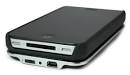
Energizer Wireless Charger for iPhone 4 [VIDEO]

Sunday, January 23, 2011 · By Ramin

Do you like this story?

Another new Wireless Charger for iPhone has been released after “PowerMat”. This new Wireless Charger uses the same law of “Magnetic Induction” to charge your Device wirelessly. With this Energizer Inductive Charger you just have to place your iPhone 4 onto it’s surface and it will automatically start charging your iPhone. You can also charge some of the Blackberry Phone using this Energizer. This charger is also available for iPhone 3G and 3Gs but with a slightly different design.it has a quite attractive design with a wedge-shaped piece of piano-black plastic on the top of it,and it’s a little larger than a paperback. There are two spots on the top of it on which you can Charge two of your devices at once. Also it have a USB Port which again let you charge another device through that port. So with this “Charge Station” you can Charge three devices simultaneously.here is the complete design of how this Charge station works:This Energizer supports any Qi-Enabled device, you can charge any any Qi-enabled device with this wireless charger.These inductive chargers are available in more than one design, depending on your need. If you have one iPhone and want to use it alone, they have made a simple Sleeve for only iPhone support only.you can see it in the image below.This charger not exactly thin, but thinner than an auxiliary battery pack, it completely cover your iPhone in it,the top of the iPhone is still exposed,the back of the iPhone 4 sleeve covers up one of its most fragile parts, its glassy dorsal side,it just weighs 1.6 ounces. There’s the image of the Sleeve without iPhone inside it.This Sleeve is also available for Blackberry Curve 8990 and iPhone 3G and 3GS.The advantage of these sleeves is that if you’re one who holds your iPhone with a finger underneath, covering up its tiny speaker, the sleeve redirects the speaker’s sound toward the front. it does the inverse for the iPhone 4′s microphone, directing its sound from the front rather than the bottom, and the speaker also sounds better when your iPhone is on the sleeve. for more news coverage, you can follow us on Twitter or become a fan on our Facebook page, we will keep you updated with posts over the web.[via mashable]

Livio Radio Bluetooth Car Internet Radio Kit

Livio Radio may have come up with a good solution to a thorny problem: hooking your iPhone into your car stereo, when your car doesn’t have an Aux input. The Bluetooth Car Internet Radio Kit ($119.99 direct) adds hands-free Bluetooth calling and iPod and iPhone integration, letting you make or receive calls, stream Internet radio, or plow the depths of your iTunes music collection while on the road. The Livio kit has a few quirks, but overall, it does exactly what it’s supposed to.

Features, Design, and SetupPlugging a cable from the headphone jack to the Aux input of a car stereo is one thing. true integration is much tougher, and is usually reserved for higher-end vehicles, or expensive stereo upgrades on mainstream models. if you have no Aux jack at all, your options are limited. The Livio Kit uses a tried-and-true method to broadcast music, literally: it’s an FM transmitter. That means you set the radio to a specific frequency, which the Kit then broadcasts.

Beyond that, the Kit adds hands-free Bluetooth calling, USB charging, and hardware buttons. There’s a free Livio iPhone app that accesses over 45,000 stations across the U.S., including Internet streams of terrestrial stations by location. The app is only free if you’re using it with the Kit, though; otherwise, it drops to about 300 stations unless you pay an extra $4.99.

The Kit works with any iPhone 3G, 3GS, or 4, as well as 2nd-, 3rd-, and 4th-generation iPod touch devices. The Kit consists of three pieces: the controller module, the combination DC power adapter and 6-inch gooseneck bracket, and a small auxiliary wire that connects the iPhone’s audio to the controller module. There’s also a printed user guide; helpful, as it’s tough to go paperless if you’re out in the driveway setting it up in the car.

The controller module looks sharp. It’s made of matte black plastic, with a pleasant textured surface and a faux metal flake finish. it measures 1.9 by 3.6 by 1.1 inches (HWD) and weighs 1.6 ounces by itself, or 2.9 ounces with the gooseneck adapter attached. The red LED display shows the current station. There are plenty of useful hardware controls, including buttons for Play, Pause, stop, Track Skip, Music Tagging, and Send and End buttons for calls. There’s also a small knob that lets you choose a station, set the unit’s output volume, and trigger an automatic search for free FM stations with less static.

The DC power adapter fit snugly in my car’s accessory power socket. I positioned the controller module so that it sat a little to the right of the shift lever on the center console. On top, a line out jack lets you make a direct connection if your car has an Aux input—which would sound much better (see below)—as well as an extra Line In for hooking up an MP3 player, portable DVD player, or other device.

On the bottom is a USB charging port; however, there’s no cable in the box. That’s frustrating for several reasons: you’ll have to bring your iPhone or iPod docking cable to and from the car, and it’s tough to find a matching black cable on the aftermarket. In addition, the gooseneck cradle only holds the controller, not the iPhone. You’ll still need a separate mount, cupholder, or other place to put the phone. All told, it’s not the cleanest-looking solution, but it’s also plug-and-play: you don’t need to have a shop install anything, like you would with some other solutions.

Testing, FM Reception, and ConclusionsSetup was very simple; the controller launched into pairing mode the first time I powered up the car, found my iPhone 4, and paired successfully on the first try. after that, the iPhone automatically cued up a download for Livio’s app; I installed that, and from there, I was good to go.

In a series of tests, I made calls, listened to Livio’s app, checked out my iPhone’s locally stored music collection, and even spent an hour streaming Pandora. In back-to-back sound quality tests with my car’s built-in Bluetooth hands-free calling, callers couldn’t tell the difference between that and the Livio Radio. In both cases, callers said it was tough to tell I was calling from a car.

Most of the time, stereo music sounded good as well. I especially liked that the track skip buttons worked with Pandora (to rate songs) as well as my iTunes collection. But here’s the catch: the biggest problem with The Kit has nothing to do with Livio Radio. It’s that FM transmitters, while useful, can vary widely in sound quality. Let’s put aside the audiophile contingent for a moment, as even with perfect reception, FM transmitters slightly limit frequency response and don’t sound quite as clear or crisp as a direct or even Aux jack connection.

But even for casual listeners, depending on where you live, there may simply be too much static. I drove all around the greater Boston area while testing The Kit, using several different FM stations. Sometimes I heard a clear signal. other times, there was some faint static in the background, which only became audible in quiet musical passages or between tracks. But more often than I think was acceptable, I heard so much static that it sounded like my car’s antenna had fallen off.

Note that the static was entirely on my side; callers couldn’t hear it at all through the mic, since the mic connects directly to the phone via Bluetooth. It’s only in listening to the caller or music through the stereo that I’d hear it on my end. Sometimes it would disappear for many minutes at a time, only to return further down the interstate. (Livio recommends that you set your iPhone’s volume to maximum for best performance; then use your car stereo’s actual volume control for that purpose.)

There’s no direct alternative for this device. Products like the SuperTooth HD ($129, 4 stars) offer hands-free Bluetooth calls and voice command support, but don’t handle iPod integration. Less expensive FM transmitters work for music, but lack hands-free Bluetooth calling. if you do have an Aux input, you can just plug the iPhone in that way, although The Kit still gives you hands-free Bluetooth. you can also pop out your car’s stereo and install a receiver from Crutchfield; models with Aux inputs start at $99, while more expensive ones offer more thorough integration through the head unit’s display. But if you live in a city or rural area with fewer FM radio stations, or if you don’t mind occasional static, the Bluetooth Car Internet Radio Kit gives you full iPod connectivity and hands-free Bluetooth in one shot—without a complex stereo upgrade.

More Audio Accessory Reviews:•   Fretlight FG-421 Traditional Electric Guitar•   Blue Microphones Mikey for iPod•   Tivoli Audio The Connector•   Denon AH-D1100•   Altec Lansing Octiv Stage (MP450)•  more

White iPhone 4S spotted in AT&T systems – SlashGear

Mention of the iPhone 4S has reportedly been spotted in AT&T’s internal systems, with a leaked screenshot showing a listing for the white version of the smartphone. Listed alongside the existing iPhone 3G and four variants of the iPhone 4 in the image shared with Engadget, there’s no technical detail nor anything as telling as a photo of the smartphone itself.

The iPhone 4S is tipped by some to be Apple’s new entry-level device, a cut-price version of the current iPhone 4 that would be targeted at low-cost postpaid customers and offered as a prepay handset too. That would allow Apple to significantly extend its current range, taking on low- and mid-price Android devices.

Talk last week, however, suggested that rather than launch both the iPhone 4S and the all-new iPhone 5 simultaneously, Apple might be forced to delay the iPhone 5 and release the iPhone 4S on its own. Production difficulties around the true fifth-gen handset were cited as reason for the potential delay, with stock shortages rumored to last into early 2012. More on the latest batch of ever-circulating iPhone rumors in our full round-up from last Friday.

Nexus Prime Teaser Video After iPhone 4S Launch

There is nothing like the launch of a major, potentially big-selling product to get the competitive juices flowing.

Just hours after Apple unveiled its iPhone 4S, Samsung Mobile released a brief video as a teaser for its forthcoming Android-based Nexus Prime smartphone, which the company is expected to unveil alongside Google at the CTIA Enterprise & Applications conference in San Diego, California, on 11 October.

In the 29-second clip, Samsung compares things that go better together, such as cookies and milk, and newspapers and coffee before noting that “something big is coming” at Samsung’s Unpacked event next week at the show.

The “something big” reference is an allusion to the screen size of the Nexus Prime, which reportedly offers a 4.65-inch, Super AmoLED Plus display with a 1,280-by-800 resolution. at the end of the video, Samsung shows a dark, side-view of the alleged Nexus Prime, which is clearly contoured like the Samsung Nexus S that came before it but appears to have a larger display.

The Nexus Prime almost certainly will launch exclusively on Verizon Wireless with Android 2.4 “Ice Cream Sandwich”, the next-generation build that employs an holographic user interface from the Android 3.0 “Honeycomb” branch for tablets.

For an idea of how that will look, check out this video made by someone who scored a Samsung Nexus S running ICS on eBay. Note the multitasking and notifications functionality.

GSM Arena offered several other details, including that is has a metal body and packs a 2,000-mAh battery inside a super-thin, 8.8-millimeter-thick frame. Moreover, the handset will run a 1.5GHz, dual-core Samsung Exynos processor and offer 1GB of RAM and 16GB of internal memory. an 8MP camera with HD video recording in 1080p is also on tap.

Samsung Galaxy S II handsets have sold over 10 million units worldwide since April without the benefit of major US sales.

Yet clearly Samsung feels it needs to do something big to blunt the hype from the iPhone 4S, which offers users a speedy A5 processor, an 8MP camera, iCloud and iOS 5, as well as the Siri intelligent assistant application on both GSM and CDMA networks.

While the handset still boasts the 3.5-inch screen Apple fans have become accustomed to, Samsung and Google will clearly tout the larger screen size of the Nexus Prime, the speedier processor, along with the fresh ICS build, as advantages over the iPhone 4S.

Meanwhile, Samsung sued to block the iPhone 4S launch in France and Italy, claiming the device infringes on the company’s 3G wireless technology patents.

JBL releases On Tour iBT Bluetooth Speaker

JBL has released the on Tour iBT, a new battery powered one-piece speaker that incorporates Bluetooth wireless technology to stream audio wirelessly from the iPad, iPhone, iPod or other A2DP capable devices. Weighing just over one pound, the on Tour iBT is designed for portability and can be easily carried in a backpack or purse. the unit also includes a tabletop stand for an iPad in portrait or landscape mode allowing the iBT to function as an audio output for video playback. the on Tour iBT features four Odyssey full-range neodymium transducers with computer optimized digital signal processing equalization for detailed, 360-degree sound and supports both the A2DP and AVRCP Bluetooth audio profiles. a built-in microphone also allows the unit to be used as a speakerphone for conference calls or video chats. the speaker is powered by four AA batteries or an external AC power source; when connected to a wall outlet the iBT can also charge an iPad, iPhone or iPod via a built-in USB connection. the JBL on Tour iBT sells for $150 and is available from JBL.com and other JBL retailers.

Lederhosen laptop sleeve — the perfect yodeling accessory

If Maria von Trapp were around, this would be covering her laptop.

Dutch laptop accessory maker CoverBee is selling a laptop sleeve shaped like lederhosen, leather breeches that were the traditional garb of the German workman.

The sleeve consists of a child-size pair of lederhosen "made of the finest real leather!" and a matching gingham shirt in pink (the Heidi) or blue (the Peter), according to the website.

The cover also has "cute little knots," adjustable suspender straps and a lining of fake "sheep fur."

"As if that wasn't already good enough," the website brags, "the sleeve has real pockets to insert your laptop accessories and the trouser buttons can actually really be opened as a kind of 'ventilation' for your…hmm, laptop :)"

CoverBee said that idea for the sleeve came after pondering the lederhosen, which is "normally used for protecting a man's best body parts."

"the goal of the German state of Bavaria is on the one hand keeping their traditions and on the other hand becoming a 'laptop society,'" the company said. "So what is better than having these two goals combined in the 'traditional & new' Lederhosen laptop sleeve?"

Unfortunately, dressing your laptop in leather pants is not cheap. each sleeve costs $199.99, with free shipping.

RELATED:

Titanium iPhone case? Yes, for $300

FDA proposes regulation of mobile healthcare apps

FDA proposes regulation of mobile healthcare apps

Photo: Model toting the lederhosen laptop sleeve. Credit: CoverBee

iPhone 4S pre-order begint vandaag in Duitsland, Frankrijk, UK en meer landen – iPhone – iPhoneclub.nl

Na een lange dag stilte op iPhoneclub, uit respect voor Steve Jobs, gaan we vandaag weer van start met het nieuws. De iPhone 4S is vanaf vandaag in pre-order te bestellen. in de VS, maar ook in enkele Europese landen zoals Duitsland en Frankrijk, is de iPhone 4S vanaf 9:01 uur plaatselijke tijd te reserveren. Het uitleveren begint echter pas vanaf 14 oktober. Dit is twee dagen na de officiële start van iCloud en iOS 5. in Nederland en België komt de iPhone 4S twee weken later, op 28 oktober beschikbaar. via de online Apple Store kunnen klanten een iPhone 4S zonder abonnement aanschaffen. in Duitsland en Frankrijk betaal je €629 voor het goedkoopste model, een iPhone 4S met 16GB opslagruimte. De inwoners van de betreffende landen krijgen overigens ook nog te horen wat de tarieven bij de diverse providers zijn. Operator T-Mobile heeft in Duitsland de prijzen al vrijgegeven. De goedkoopste 16GB iPhone 4S is voor een prijs tussen de €49,99 en €239,99 verkrijgbaar bij een abonnement. Wil je de 64GB iPhone 4S, dan moet je tussen de €279,99 en €459,99 betalen. De bijbehorende abonnementen kosten tussen de €35,96 en €89,95 per maand. Mensen die een Premiere Ticket bij T-Mobile hadden gekocht, kunnen vanaf 9:00 uur langsgaan bij hun lokale T-Mobile-verkooppunt in Duitsland.

In de VS is de Apple Store al offline gegaan, ter voorbereiding op de pre-orders. Deze zullen vanaf 12:01AM PST (Pacific Time) van start gaan. in de VS zijn de abonnementsprijzen al bekend. Ook kunnen de Amerikanen kijken of ze in aanmerking komen om te upgraden. Ook al is de iPhone 4S een wereldtelefoon die GSM en CDMA aankan, dat wil niet zeggen dat het volledig zonder beperkingen is. Amerikanen die de iPhone 4S willen kopen, zullen ontdekken dat de iPhone 4S op een CDMA-netwerk geactiveerd moet worden. Het tussentijds wisselen tussen aanbieders Sprint en Verizon blijkt bovendien moeilijker dan gedacht.

Hoewel Apple een unlocked iPhone 4S verkoopt, gaat het in werkelijkheid alleen om een unlocked GSM-versie, zoals gebruikt door AT&T. Je kunt de iPhone 4S wel op het Amerikaanse netwerk van T-Mobile gebruiken, maar omdat die een andere frequentieband voor 3G-verkeer gebruikt (die de iPhone niet ondersteunt) zul je slechts op GPRS-snelheid kunnen internetten. Mocht je op vakantie gaan naar de VS, dan is het dus zaak op te letten dat je op AT&T zit, als je snel wilt internetten (en een flinke buitenland-databundel hebt). Nog een ander aandachtspuntje: een iPhone geactiveerd op het AT&T-netwerk werkt niet automatisch op CDMA-netwerken in andere landen, zoals in Korea. Ook kunnen operators of landen bepaalde beperkingen opleggen.

Nog een ander punt over de datasnelheid: de iPhone 4S ondersteunt HSDPA tot 14,4 Mbps. Afhankelijk van de definitie die je hanteert kun je daarbij over 4G spreken. Maar niet iedereen zal daarvan kunnen profiteren. De lokale operator moet maar net die snelheid ondersteunen. AT&T in de VS kan bijvoorbeeld in de praktijk maar snelheden tussen de 700 kbps en 1,7 Mbps, waardoor gebruikers maar eentiende van het potentieel gebruiken. Vodafone en T-Mobile bieden bij hun iPhone-abonnementen een snelheid van 7,2 Mbps. Bij KPN kun je bij de abonnementen Bel-SMS-WebXL wel theoretische snelheden van 14,2 (gek genoeg geen 14,4) Mbps verwachten. Bij Vodafone heeft Bel+SMS+Web Smart wel 14,4 Mbps en bij T-Mobile is 7,2 Mbps echt het hoogst haalbare.

Environment

It is the cleanest, most abundant energy source. but solar power faces the challenge of affordability and efficiency, especially if such systems are to be widely installed in the developing world.

Progress is being made. Scores of Chinese companies are touting their latest solar electronic components and products at an international trade fair in Hong Kong.

most of the products on display here at the Hong Kong Electronics fair are practically unusable for the 1.6 billion people, a quarter of the world’s population, living without electricity.in sunny Africa and South Asia, which have the lowest electrification rates, cheaper and more efficient solar cells are in demand. and innovation is occurring, says Zhong Xiao Jun, whose company in Guangzhou, China makes solar panels, chargers and lighting systems.”To improve competitiveness of our products, we are working on increasing battery performance,” he says. “We are using some printed circuit board to cut energy losses. secondly, we are increasing the electrical conversion efficiency of solar panels. This is possible because we are utilizing special new materials and techniques for our panel production line.”One of the challenges of solar power, of course,  is what do you do when the sun is not shining?

There are innovative solutions, such as this one: a hybrid system that relies not only on solar, but also wind power, for street lamps. It is already operational in Shenzhen, China and Germany.in North America and Europe, more expensive crystalline silicon technology is preferred for high power, limited space installations. in the developing world, Topray Solar’s Frank Lin says cheaper thin film technology is favored.”That means they can pay for the same power with less money. Of course, the disadvantage will be a bigger size. but bigger size is not an issue for the African, for the developing countries because they have that kind of space. and usually what they use are smaller applications,” says Lin. More affordable products for daily use in places off the grid are coming to market. Solar flashlights on display here are being sold on a wholesale basis for as little as 35 cents each.a detachable LED shines up to 20 hours when fully charged and retails for under $100.Solar power, globally, is reaching new heights every year. Industry officials say installations reached a record high of more than 18 gigawatts last year.

But the top market remains Europe. It is estimated only one percent of the world’s solar panels are in the developing world.

Swype, The Maker Of Speedy Virtual Keyboards, To Be Acquired By Nuance For $100 Million+

Swype has been blowing minds since it first launched at TechCrunch 50 back in September of 2008. for those unfamiliar, Swype is the maker of an awesome app that allows users of touchscreen mobile devices to type messages with one swipe of the finger or stylus motion across the screen keyboard. The alternative (and patented) input method has proven to be super speedy, allowing data entry at over 40 words per minute, and has swept across Android devices.

Today, thanks to the reporting of one Michael Arrington via Uncrunched, we’ve learned that Swype has been acquired by Nuance (the makers of voice recognition technology) for over $100 million. The deal was confirmed by the Wall Street Journal, which pegged the numbers to be between $100 and $150 million.

The official announcement is expected to be made tomorrow.

Nuance, which has a market cap of about $6.7 billion, has been on an acquisition roll of late, snatching up speech recognition software company SVOX in June, at the same time announcing the close of its $157 million acquisition of software developer Equitrac.

The speech recognition giant has also been in the news of late, as it is has been in negotiations with Apple over licensing for Lion OSX. What’s more, while Apple did not confirm, MG held that Nuance is also a large part of the technology behind Siri, which will be native on all iPhone 4Ses. As MG wrote yesterday, “even if Apple wanted and tried to come up with their own voice technology backend for Siri, they would have a hard time doing so without infringing on some of Nuance’s patents. Patents which Nuance CEO Paul Ricci is very well known to enforce to their maximum extent”.

What’s more, it will be interesting to see how Nuance resolves the fact that it now owns both Swype and T9, another predictive text app. and, as Mike wrote, it just so happens that T9 “competes directly with Swype” and was also founded by Cliff Kushler, the very same guy who co-founded Swype. will the two products join forces, or is T9 headed for the trash heap? I’m sure Nuance will have more information on that tomorrow, or in the coming weeks.

Swype had raised just under $14 million in outside investment since 2008 and just closed its series C back in July. The acquisition is a big win for the startup, its investors (Samsung Ventures, Nokia Growth Partners, Benaroya Capital, DoCoMo Capital, Ignition Partners, and more), and for Nuance. with Swype’s app appearing on (what will soon be) 100 million devices, and smartphone and touchscreen adoption skyrocketing, these technologies will no doubt be a big part of our mobile future.

Update: The exact amount paid for Swype, according to an SEC filing, is $102.5 million.

Apple iPhone 4S: behind the queues, the concerns

APPLE’S upgraded iPhone 4S went on sale today, prompting a rush on stores around the world. it arrived less than two days after the company unveiled its new operating system iOS5, which caused a 20 per cent spike in internet traffic in the UK and Europe after its launch as customers updated their devices.

The buzz is impressive, considering there was widespread disappointment when Apple failed to announce the much-anticipated iPhone 5 at a press conference earlier this month. But interest in Apple products has been piqued by the death of co-founder Steve Jobs, and iOS5 has a large number of new features, including iMessage – a rival to BlackBerry’s messaging service, that have been well received.

But despite the queues and the positive reviews not everyone is convinced. Some users were unable to download iOS5 when demand was high, and others reported losing data when they did download the new system, leading to unflattering comparisons with their rival BlackBerry, which has been battling outages all week. Apple’s problems were not serious but it did not help in their efforts to rub RIM’s noses in it.

But there was worse to come. Live blogging the iPhone 4S launch in New York, CNET admitted: “Honestly, this launch just doesn’t have the same energy and spark as other Apple product launches.”

According to The Guardian the iPhone 4S is selling significantly more units than the iPhone 4 managed on its launch, even though it has arrived with one of its main features, voice command system Siri, at half-mast. as the British version of CNET reports: “Here in the UK, Siri’s local maps and look-ups don’t work yet. That’s because Apple doesn’t have a deal with a UK-focused provider of local information.”

But as Shane Richmond comments in his review for The Daily Telegraph, the revamped iPhone 4 makes sense. “In hindsight, this year’s upgrade makes sense: it mirrors the 2009 upgrade from iPhone 3G to iPhone 3GS.”

He concludes: “Overall, the iPhone 4S is a good upgrade to a very good phone.”